


No-one in their right mind would manage millions of documents in Salesforce. Still, many have exactly that need.
CRM is all about shared knowledge
The idea of a unified customer relation management system is nothing new. The concept of managing the knowledge related to your customers and prospects as shared assets makes sense to almost all organizations.
Throughout time, organization after organization have learned the hard way that knowledge is only valuable if it is shared, used, and up to date. That is why, the typical Salesforce system today is tightly integrated with other systems in your IT landscape.
Salesforce has come a long way
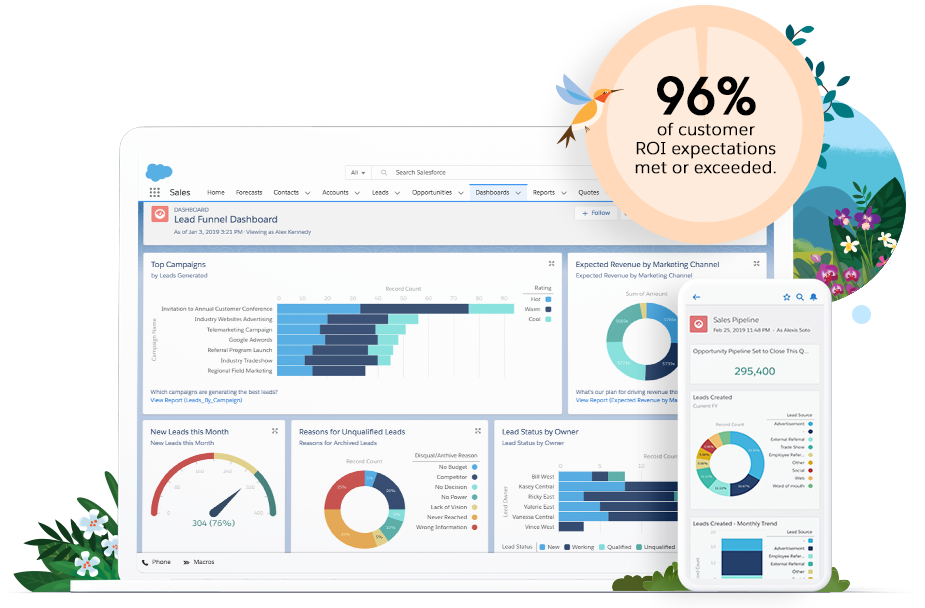
Originally, Salesforce was just another CRM system. A system from where your managed their dialog with your potential and existing customers. As of now Salesforce is so much more. At many companies Salesforce is taking over the entire customer engagement. And at some companies, big parts of the entire IT landscape.
At Bauder, a leading international provider of roofing systems, all customer and project related work is now handled using Salesforce.
At Fennia, a Nordic insurance company, Accenture is right now building the next generation insurance platform based on Salesforce.
Knowledge is made up by data and documents
As mentioned earlier, many organizations have already learned the hard way, that capturing tons of data and leaving it to deteriorate in their Salesforce solutions generates nothing but trouble. The same understanding is materializing around documents.
A unified enterprise archive is the answer
The situations may seem rather different – a company using Salesforce as a traditional CRM system, another using Salesforce for all its Customer Engagement, and finally a company basing most of its future IT landscape on Salesforce – but the answer is the same: A unified enterprise archive.
- In either case, you need everyone to have seamless access from Salesforce to all the document-based knowledge in your entire company. Also, the knowledge that is not generated inside Salesforce.
- In either case, you would like anyone not working from inside Salesforce to have access to documents created and captured in Salesforce.
- In neither case, do you wish GDPR sensitive documents to be managed in multiple places. The more systems involved, the higher risk of expensive mistakes.
- In neither case, can you afford to clutter your Salesforce environment with millions of documents, of which some need to be kept for decades.
The answer is: A unified enterprise archive.
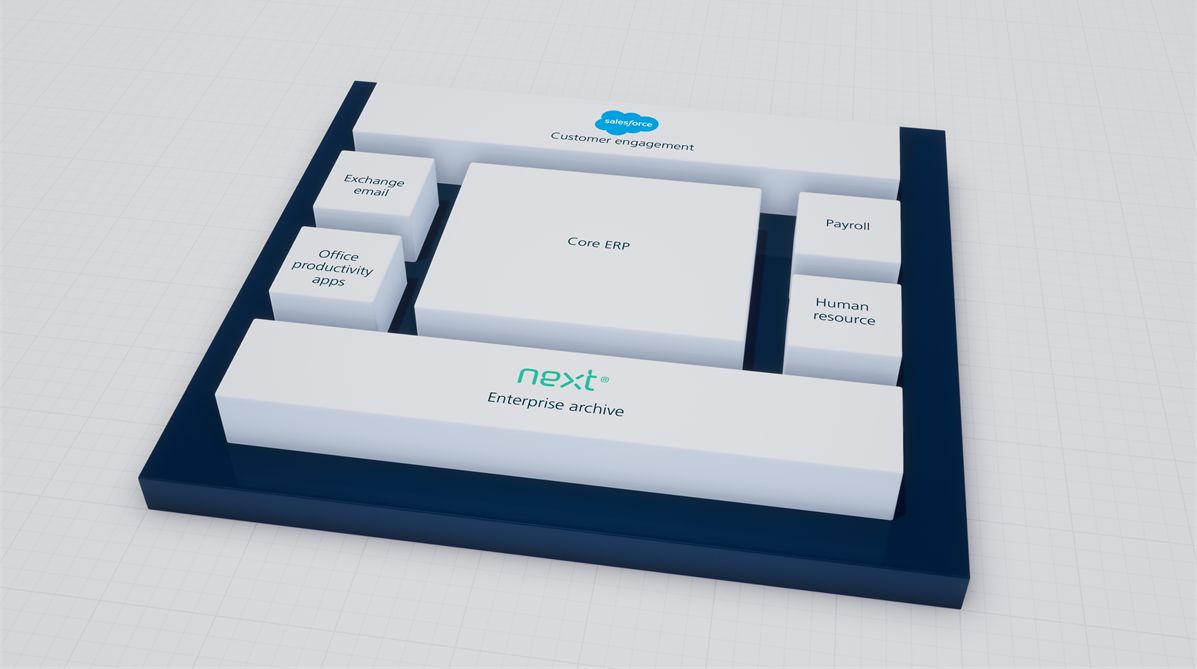
Next Enterprise Archive for Salesforce
Of course, it doesn’t have to be our unified enterprise archive – Next, but it is a good option to consider.
Next comes with all the basic features out of the box and allows you to add new features when your needs grow. Next runs in Microsoft Azure and keeps your documents safely within the EU. The Next Enterprise archive for Salesforce connector is available from the Salesforce AppExchange and installs in minutes.
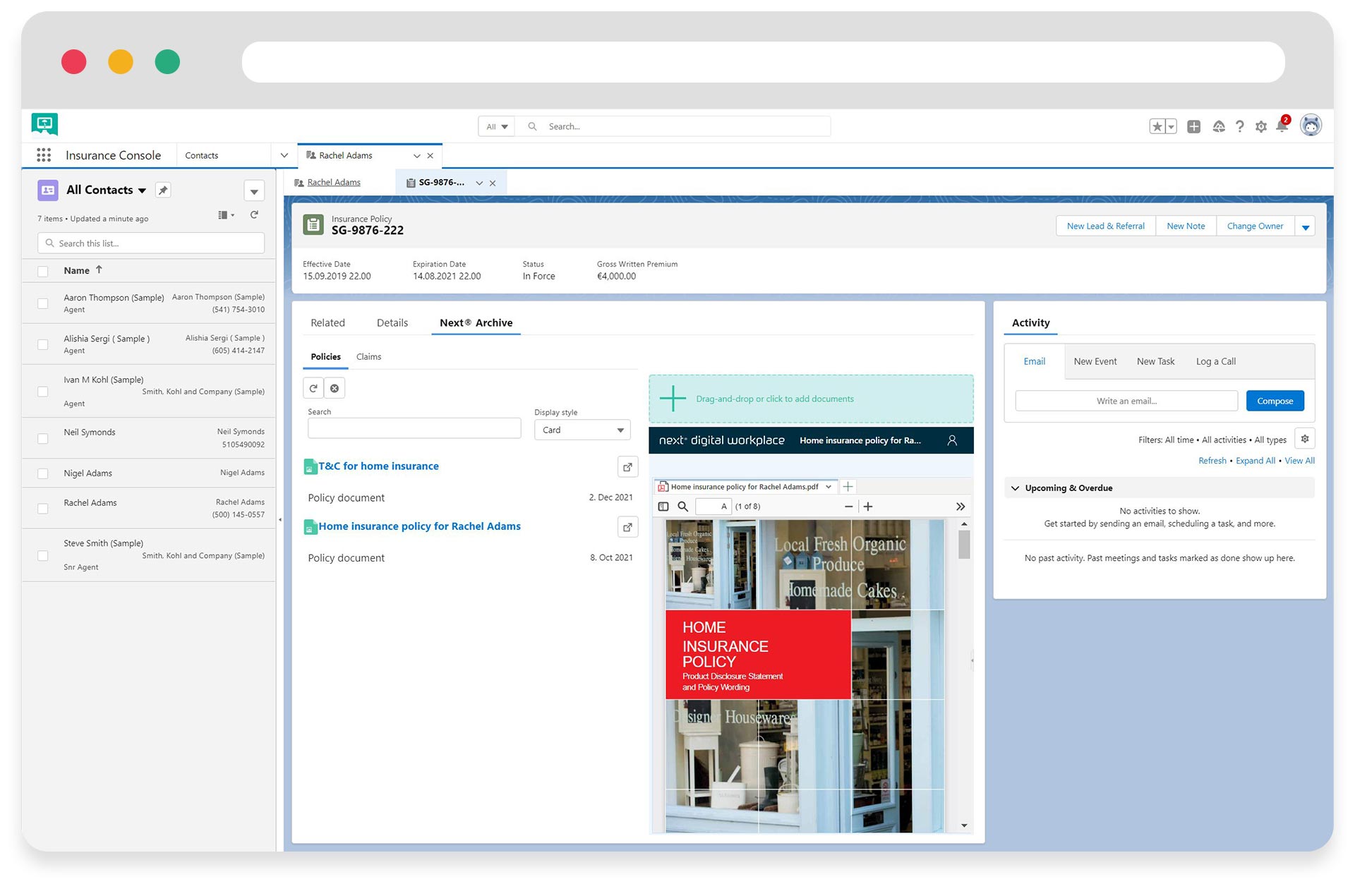
With the connector and its lightning component, you can add document views to any of your Salesforce objects – standard or custom.
100% seamless Salesforce integration
With Next in place you get seamless and secure access to the millions documents in your organization, no matter if they were created in Salesforce or not.
Next® is the easy answer to all your challenges with document management in Salesforce.
Always rely on expertise
At Nextway we are still learning when it comes to Salesforce. That is why we teamed up with some seriously experienced Salesforce specialists for the development of our Salesforce AppExchange certified connector.
Read more about how to integrate your salesforce with a document management system in less than 7 days.
When it comes to Enterprise Content Management this is what we do. We have more than 3 decades of experience and have seen it all. If you have any challenges related to Salesforce document management, I’m confident that we can help.